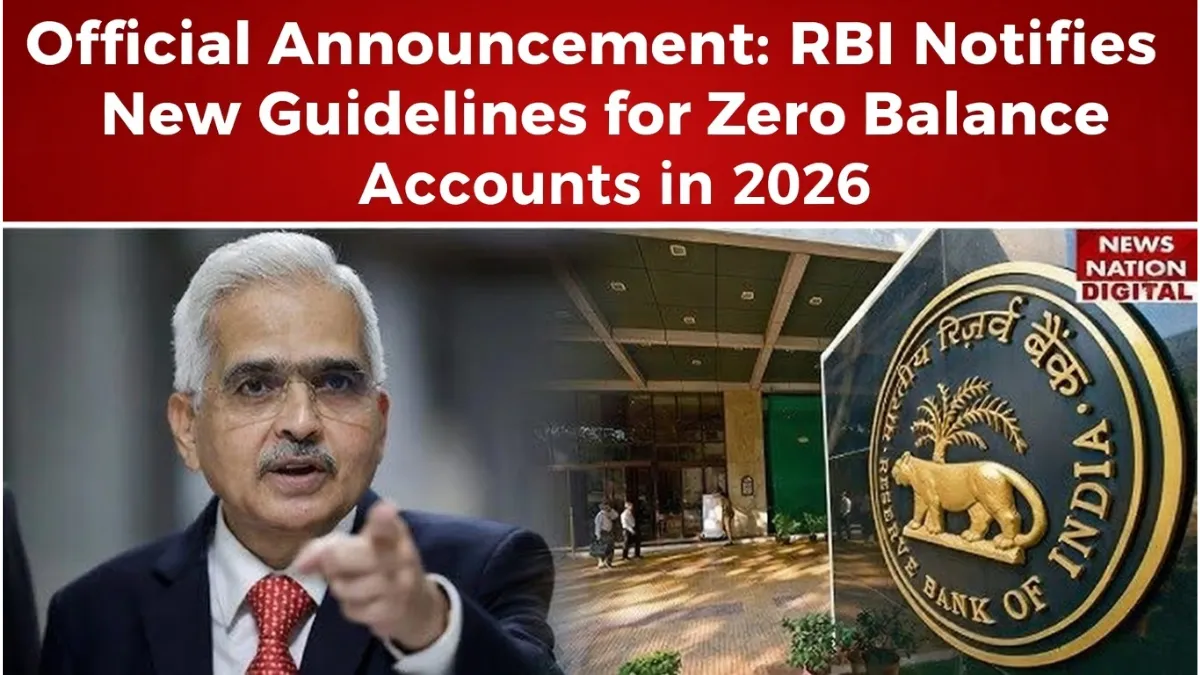
The Reserve Bank of India has officially notified new guidelines for zero balance savings accounts in 2026, aiming to strengthen financial inclusion while tightening compliance and customer protection norms. These changes are expected to impact millions of basic savings bank deposit account holders across the country, especially those using zero balance accounts for government benefits, salaries, and everyday transactions.
Why RBI Introduced New Guidelines
The updated framework has been introduced to balance financial inclusion with system integrity. While zero balance accounts have helped bring unbanked citizens into the formal banking system, misuse and dormant accounts have raised concerns. The new rules are designed to ensure genuine usage, reduce fraud, and improve transparency without discouraging low-income account holders.
What Changes for Zero Balance Account Holders
Under the 2026 guidelines, account holders can continue to maintain zero balance accounts, but banks may impose stricter transaction limits if KYC requirements are incomplete. Periodic KYC updates will become mandatory, and failure to comply could lead to restricted services rather than immediate account closure. This approach ensures continuity while nudging customers toward compliance.
Key AreaNew RBI Guidelines for 2026Account TypeBasic Savings Bank Deposit AccountsMinimum BalanceZero balance continues, with conditionsKYC ComplianceEnhanced verification and periodic updatesTransaction LimitsRevised caps on deposits and withdrawalsBank ResponsibilityStronger monitoring and customer communicationImpact on Deposits, Withdrawals, and Transfers
The RBI has clarified that basic banking facilities such as deposits, withdrawals, and digital transfers will remain available. However, caps on the number or value of transactions may apply depending on account activity and verification status. The intention is to prevent misuse while ensuring essential banking access remains uninterrupted.
Role of Banks and Customer Communication
Banks will be required to proactively inform customers about applicable limits, KYC deadlines, and any changes in account status. Improved monitoring systems and clearer communication are expected to reduce confusion and protect customers from sudden service disruptions, in line with directions issued by the Reserve Bank of India.
What Account Holders Should Do Now
Zero balance account holders are advised to review their KYC status, ensure valid documents are updated, and stay informed through official bank notifications. Keeping accounts active and compliant will help avoid restrictions under the new regulatory framework.
Conclusion: The RBI’s 2026 guidelines reinforce the importance of zero balance accounts while introducing safeguards to ensure responsible usage, better compliance, and long-term stability of the banking system.
Disclaimer: This article is based on officially notified RBI guidelines and general regulatory interpretations for 2026. Actual implementation, transaction limits, and compliance requirements may vary by bank and individual account status. Readers should refer to official bank communications and RBI notifications for accurate and legally binding information.