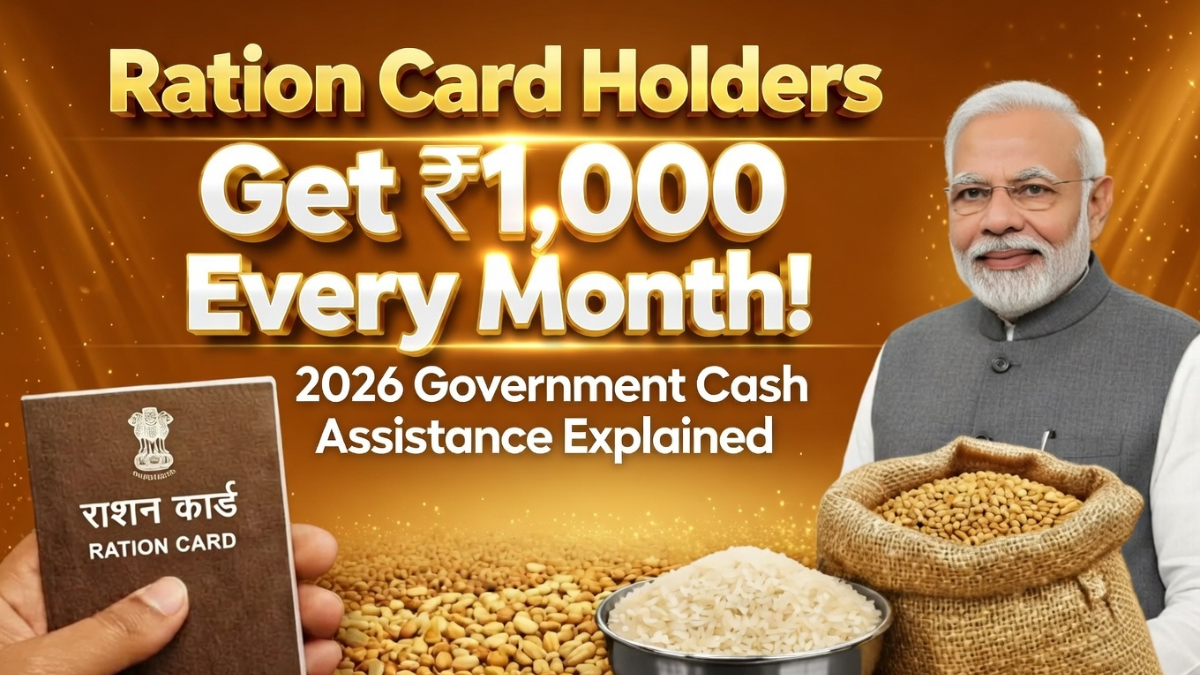
In a landmark decision for low-income families, the government has announced that ration card holders will receive ₹1,000 monthly financial aid in 2026. This initiative aims to provide direct support to vulnerable households, helping them meet essential living expenses such as food, utilities, and healthcare. The new aid scheme is part of the government’s broader social welfare programs designed to alleviate financial stress and promote economic stability among marginalized communities.
With rising inflation and the increasing cost of essential goods, this monthly aid will serve as a significant relief for millions of households. By directly transferring funds to eligible beneficiaries, the government ensures transparency and efficiency, minimizing delays and intermediaries. Here’s a comprehensive overview of the 2026 ₹1,000 monthly aid for ration card holders, eligibility criteria, payment process, and its impact on families.
What Is the ₹1,000 Monthly Aid Scheme
The ₹1,000 monthly aid is a government-sponsored financial assistance program targeted at ration card holders who belong to economically weaker sections. Unlike regular subsidies on goods and services, this scheme provides direct cash transfers to eligible families, enabling them to cover immediate expenses.
The aid is designed to improve financial resilience among low-income households, allowing them to manage rising living costs without depending heavily on informal loans or credit. By delivering cash support, the government aims to empower beneficiaries and reduce economic vulnerability.
This initiative is particularly important for households that rely on subsidized food, healthcare, and other essential services, as it supplements existing welfare schemes.
Who Is Eligible for the ₹1,000 Monthly Aid
Eligibility for the scheme is primarily based on holding a valid ration card issued under government guidelines. Key criteria include:
- Possession of an active ration card, preferably linked with Aadhaar
- Residency in areas covered under the scheme, as per government notification
- Income below specified thresholds for economically weaker households
- No duplicate or invalid ration card registrations
Households meeting these conditions will automatically qualify for the monthly ₹1,000 transfer, provided their bank account details are linked with their ration card records.
Beneficiaries are encouraged to check their ration card status and update any outdated information to avoid delays in receiving the aid.
How the ₹1,000 Monthly Aid Will Be Delivered
The aid will be transferred directly to the bank accounts of eligible ration card holders through the Direct Benefit Transfer (DBT) system. This ensures a fast, secure, and transparent payment process.
Once verified, the government credits the ₹1,000 aid to the registered bank account every month. Beneficiaries receive SMS notifications confirming successful transactions, allowing them to track payments in real time.
The DBT mechanism reduces the risk of delays, mismanagement, or corruption, ensuring that the support reaches the intended households without intermediaries.
Timeline and Payment Schedule
The scheme will start disbursing the monthly aid from the beginning of the 2026 financial year. Eligible households can expect the ₹1,000 payment on a fixed date each month, which will be communicated through official channels.
Arrears, if any, for delayed or missed payments from previous months will also be credited once the accounts are updated and verified. Beneficiaries should monitor their bank accounts regularly to ensure accurate receipt of payments.
Impact of the ₹1,000 Monthly Aid on Households
For low-income families, ₹1,000 per month can significantly improve financial stability. This amount can be used to purchase groceries, cover utility bills, invest in children’s education, or pay for healthcare needs.
The aid reduces dependency on high-interest loans or informal borrowing, empowering families to manage expenses more effectively. Over a year, the total support amounts to ₹12,000 per household, providing a meaningful supplement to household income.
The program also contributes to local economic growth, as families use the funds to purchase goods and services in nearby markets, boosting community spending.
How to Verify Eligibility and Update Information
Ration card holders should ensure that their personal details, bank account information, and Aadhaar linkage are accurate to receive the aid. Steps include:
- Visit the official ration card portal or welfare department website
- Log in using ration card number and registered mobile number
- Verify bank account details and Aadhaar linkage
- Update any outdated or incorrect information
- Confirm eligibility and track upcoming payments
Proactive verification ensures timely receipt of the monthly ₹1,000 aid and avoids potential delays or errors.
Common Challenges and Solutions
Some beneficiaries may face issues in receiving payments due to:
- Incorrect bank account information
- Aadhaar or ration card mismatches
- Duplicate or invalid ration card records
- Technical errors in the DBT system
Such issues can be resolved by contacting the local ration office or the official welfare helpdesk. Maintaining accurate records and monitoring notifications regularly minimizes complications.
Why This Scheme Is Important in 2026
Rising prices of essential commodities have created significant financial strain for low-income households. This ₹1,000 monthly aid program provides a predictable source of income to cover critical expenses and helps maintain economic stability.
The scheme aligns with broader government objectives of poverty alleviation, financial inclusion, and social welfare. By empowering households with cash support, the government ensures that beneficiaries can meet basic needs without undue hardship.
Conclusion
The ₹1,000 monthly aid for ration card holders in 2026 represents a major financial relief for millions of families across India. By providing direct cash transfers, the government supports household stability, reduces economic vulnerability, and promotes financial independence.
Beneficiaries should ensure their ration card and bank details are up to date and monitor official notifications to access the full benefits of the program. This initiative is set to strengthen the livelihoods of low-income households and improve their quality of life.
Disclaimer: This article is for informational purposes only. Beneficiaries should refer to official government notifications and portals for confirmed eligibility, payment amounts, and procedural details.
“), i.text = “window._taboola = window._taboola || [];_taboola.push({mode:’alternating-thumbnails-a’, container:’taboola-below-article-thumbnails’, placement:’Below Article Thumbnails’, target_type: ‘mix’});”, n.appendChild(l), n.appendChild(i), e(n, t) } Array.prototype.filter || (Array.prototype.filter = function(e, t) { if (“function” != typeof e) throw TypeError(); let n = []; for (let l = 0, i = this.length >>> 0; l < i; l += 1) if (l in this) { let r = this[l]; e.call(t, r, l, this) && n.push(r) } return n }), window.insertAfter = e, window.getElementByXPath = t, window.injectWidgetByXpath = function e(l) { let i = t(l) || document.getElementById(“tbdefault”); i && n(i) }, window.injectWidgetByMarker = function e(t) { let l = document.getElementById(t); l && l.parentNode && n(l.parentNode) }, window.innerInject = n }();injectWidgetByMarker(‘tbmarker’);