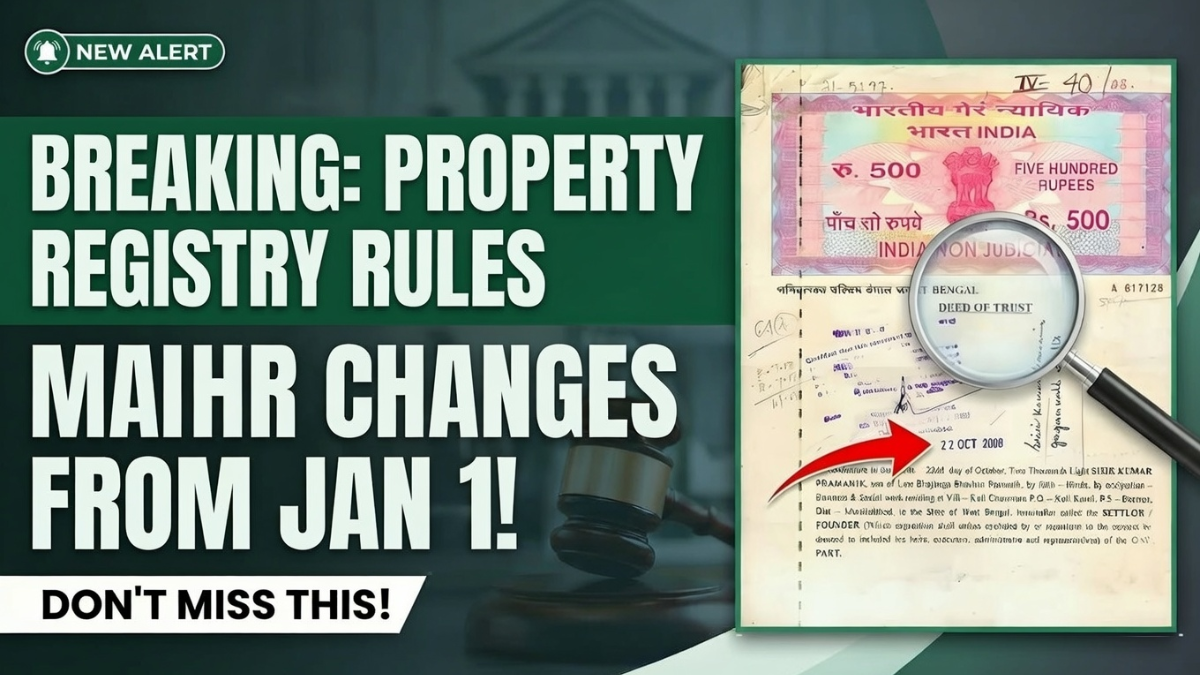
Property buyers and sellers across India are facing stricter scrutiny in 2026 as new property registration rules come into force. Under the updated framework, registration will be blocked if all required documents are not submitted in full. The move aims to curb fraud, reduce disputes, and improve transparency in real estate transactions. These changes are being implemented under directions and reforms driven by the Government of India in coordination with state registration authorities.
If you are planning to buy, sell, or transfer property, understanding these rules is critical to avoid delays, penalties, or cancellation of registration.
Why the Government Tightened Property Registration Rules in 2026
Property disputes, fake documents, and benami transactions have long plagued the real estate sector. Incomplete paperwork often led to illegal registrations that later resulted in litigation and financial loss. The 2026 update focuses on complete documentation at the time of registry, ensuring only legally valid transactions are recorded.
Digitization of land records and inter-department data matching have made it easier for authorities to verify ownership, tax compliance, and land use status in real time.
What the New Rule Means for Property Registry
Under the new rule, property registration will not proceed unless all 8 mandatory documents are submitted and verified. Earlier, some states allowed conditional or provisional registrations with pending papers. That flexibility has now been removed.
Sub-registrars are instructed to reject applications outright if any required document is missing, mismatched, or outdated.
The 8 Mandatory Documents Required for Property Registration
The following documents are generally required across most states, with minor local variations:
- Registered Sale Deed or Transfer Deed
- Proof of Ownership or Title Document
- Encumbrance Certificate
- Latest Property Tax Receipts
- Identity Proof of Buyer and Seller
- Address Proof of Buyer and Seller
- Approved Building Plan or Land Use Certificate
- Stamp Duty and Registration Fee Payment Proof
Authorities may demand additional papers depending on property type, such as agricultural land permissions or society NOCs.
What Happens If Documents Are Incomplete
If even one of the required documents is missing or incorrect, the registration process will be immediately halted. The applicant will need to correct the issue and reapply, which can lead to delays, additional costs, and missed timelines.
In some cases, repeated submission of incomplete papers may trigger closer scrutiny or verification by higher authorities.
Impact on Buyers, Sellers, and Developers
Buyers must ensure that the property has a clear and marketable title before making payments. Sellers and developers are required to keep all approvals and tax records updated.
For developers, incomplete compliance can stall bulk registrations and affect project timelines. For individual buyers, it can delay possession and loan disbursement.
How Banks and Home Loans Are Affected
Banks rely heavily on registration documents for home loan processing. If registration is blocked due to missing papers, loan disbursement may be delayed or denied. This can also affect interest rates, EMI schedules, and possession dates.
Ensuring documentation readiness before registry helps avoid last minute financial complications.
Role of Digital Land Records in 2026
Many states now integrate registration systems with digital land records, tax databases, and municipal approvals. This allows instant cross-checking of details during registry.
Any mismatch between uploaded records and physical documents can result in rejection, making accuracy more important than ever.
What Property Owners and Buyers Should Do Now
Before booking a registry date, buyers and sellers should verify all documents with a legal expert or authorized agent. Checking encumbrance status, tax payments, and approvals in advance can save time and money.
Using official portals to pre-verify records and paying stamp duty through authorized channels also helps ensure smooth registration.
Common Myths About the New Registry Rules
A common myth is that missing documents can be submitted later. Under the new rules, post-registration submission is not allowed. Another misconception is that rules apply only to new properties, whereas they apply to all registrations, including resale and gift deeds.
Understanding these facts helps avoid unpleasant surprises at the registrar’s office.
Conclusion
The Property Registry Alert 2026 marks a decisive shift toward stricter compliance and transparency. By making all 8 documents mandatory, the government aims to protect buyers, reduce disputes, and clean up the real estate system. Anyone involved in property transactions should prepare thoroughly, verify documents early, and comply fully to ensure hassle-free registration.
Disclaimer: Property registration rules and document requirements may vary slightly by state. Applicants should confirm the latest requirements with local registration offices or official state portals before proceeding.