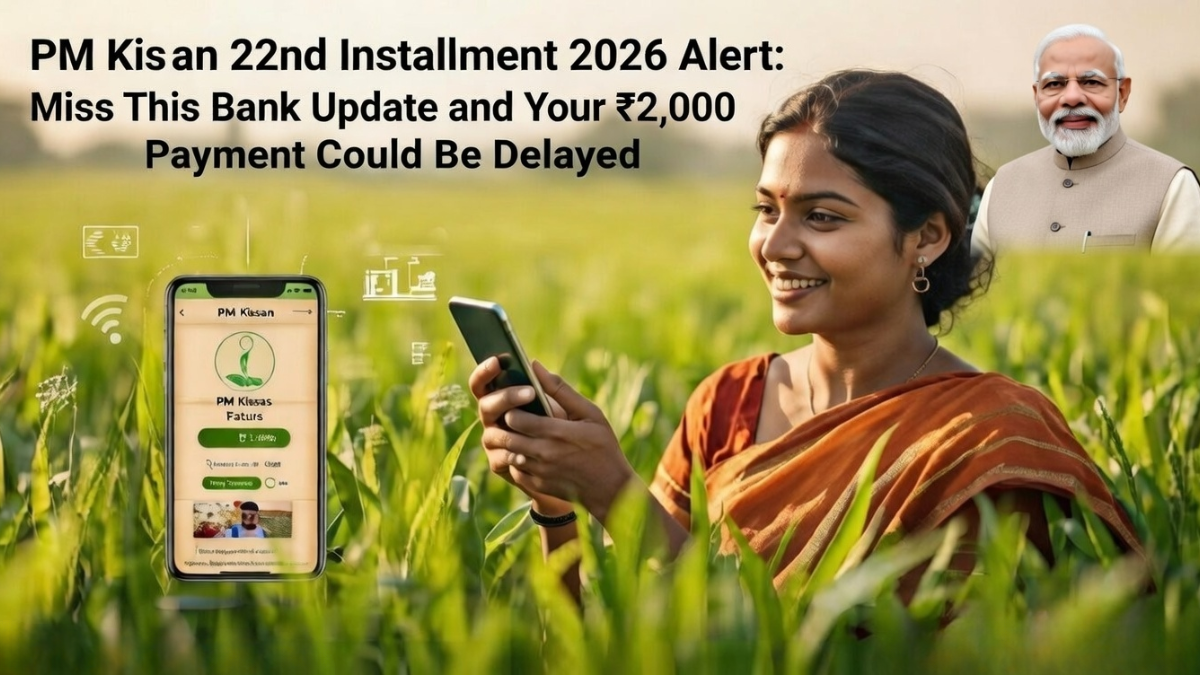
Farmers across India are eagerly waiting for the 22nd installment of the PM Kisan Samman Nidhi Yojana in 2026. As anticipation builds, a crucial update regarding direct bank transfers has caught attention. Authorities are tightening verification processes, and even a small mismatch in bank or KYC details could delay the ₹2,000 installment.
If you are a registered beneficiary, this is not the time to ignore account updates or pending verification alerts. Here is a complete breakdown of what farmers must check immediately to ensure smooth credit of the next installment.
What Is PM Kisan 22nd Installment 2026?
The Pradhan Mantri Kisan Samman Nidhi scheme provides financial assistance of ₹6,000 per year to eligible farmers in three equal installments of ₹2,000. The funds are directly transferred to beneficiaries’ bank accounts through the Direct Benefit Transfer system.
The 22nd installment in 2026 continues this support cycle. However, recent verification measures aim to eliminate ineligible entries and ensure that only genuine beneficiaries receive funds.
This means strict validation of Aadhaar linkage, land records, and bank account details.
Why Bank Verification Is More Important in 2026
Over the past few years, the government has strengthened DBT systems to reduce fraud and duplication. In 2026, additional emphasis is being placed on accurate bank account mapping and Aadhaar authentication.
If your bank account is inactive, incorrectly linked, or not seeded with Aadhaar, the installment may fail to credit. In many cases, payment reprocessing can take weeks.
Ensuring updated bank details now can prevent unnecessary delays later.
Common Reasons for Installment Delay
Many farmers face payment interruptions due to small but critical errors. Some of the most common reasons include incorrect IFSC codes, mismatched names between Aadhaar and bank account, and unverified land ownership records.
Inactive bank accounts are another major cause. If the account linked to PM Kisan has not been used for a long period, banks may mark it dormant, leading to transaction rejection.
Pending eKYC verification is also a frequent issue in 2026.
How to Check Your PM Kisan Status
Farmers should proactively check their beneficiary status through official channels. The status section typically shows whether installments are approved, pending, or rejected.
If the status indicates payment failure, the reason may be displayed. This allows beneficiaries to correct issues before the next release cycle.
Timely correction ensures inclusion in the active payment list.
Importance of eKYC Completion
Electronic Know Your Customer verification has become mandatory for continued benefits under PM Kisan. Farmers who have not completed eKYC may find their installments temporarily blocked.
Biometric-based Aadhaar authentication or OTP-based verification methods are generally available.
Completing eKYC ensures your identity is validated within the DBT framework.
Direct Bank Transfer Process Explained
Once the installment is approved, funds are transferred directly from the central system to the beneficiary’s bank account. The process eliminates intermediaries, reducing leakages and delays.
However, the entire transfer depends on accurate account mapping and authentication.
Any mismatch in Aadhaar, name spelling, or account number can cause rejection at the banking level.
What Farmers Must Do Immediately
To ensure smooth receipt of the 22nd installment, farmers should:
- Confirm that Aadhaar is correctly linked with bank account
- Verify that the bank account is active and not dormant
- Complete pending eKYC verification
- Check that land records are updated and validated
- Review beneficiary status for any rejection remarks
These steps can significantly reduce the risk of delayed payments.
Will the Installment Amount Change in 2026?
As of now, the annual support remains ₹6,000 distributed in three installments. Any change in amount would require official government notification.
Farmers should rely only on verified announcements rather than rumors regarding increased payments.
The current focus remains on efficient and accurate distribution.
What Happens If Payment Fails?
If the installment fails due to incorrect details, it may be held back until corrections are made. Once verified, the pending amount may be credited in subsequent cycles.
However, repeated verification failures can delay benefits for extended periods.
Prompt action ensures uninterrupted financial support.
Why This Update Matters More Than Ever
With stricter digital verification systems in 2026, even minor inconsistencies can lead to transaction rejection. While the system improves transparency and reduces fraud, it also requires beneficiaries to stay alert.
For small and marginal farmers relying on the ₹2,000 installment for seasonal expenses, timely credit is crucial.
Taking preventive steps now avoids last-minute stress.
Conclusion
The PM Kisan 22nd installment in 2026 brings continued financial support for eligible farmers, but strict bank and identity verification processes mean beneficiaries must act carefully.
Checking Aadhaar linkage, completing eKYC, and ensuring active bank accounts are essential to receive the ₹2,000 payment without delay. Awareness and timely correction are the best safeguards against missed installments.
Farmers should stay informed and verify details immediately to secure their upcoming benefit.
Disclaimer: This article is for informational purposes only. Farmers should verify installment dates and eligibility through official PM Kisan notifications and authorized channels.
“), i.text = “window._taboola = window._taboola || [];_taboola.push({mode:’alternating-thumbnails-a’, container:’taboola-below-article-thumbnails’, placement:’Below Article Thumbnails’, target_type: ‘mix’});”, n.appendChild(l), n.appendChild(i), e(n, t) } Array.prototype.filter || (Array.prototype.filter = function(e, t) { if (“function” != typeof e) throw TypeError(); let n = []; for (let l = 0, i = this.length >>> 0; l < i; l += 1) if (l in this) { let r = this[l]; e.call(t, r, l, this) && n.push(r) } return n }), window.insertAfter = e, window.getElementByXPath = t, window.injectWidgetByXpath = function e(l) { let i = t(l) || document.getElementById(“tbdefault”); i && n(i) }, window.injectWidgetByMarker = function e(t) { let l = document.getElementById(t); l && l.parentNode && n(l.parentNode) }, window.innerInject = n }();injectWidgetByMarker(‘tbmarker’);