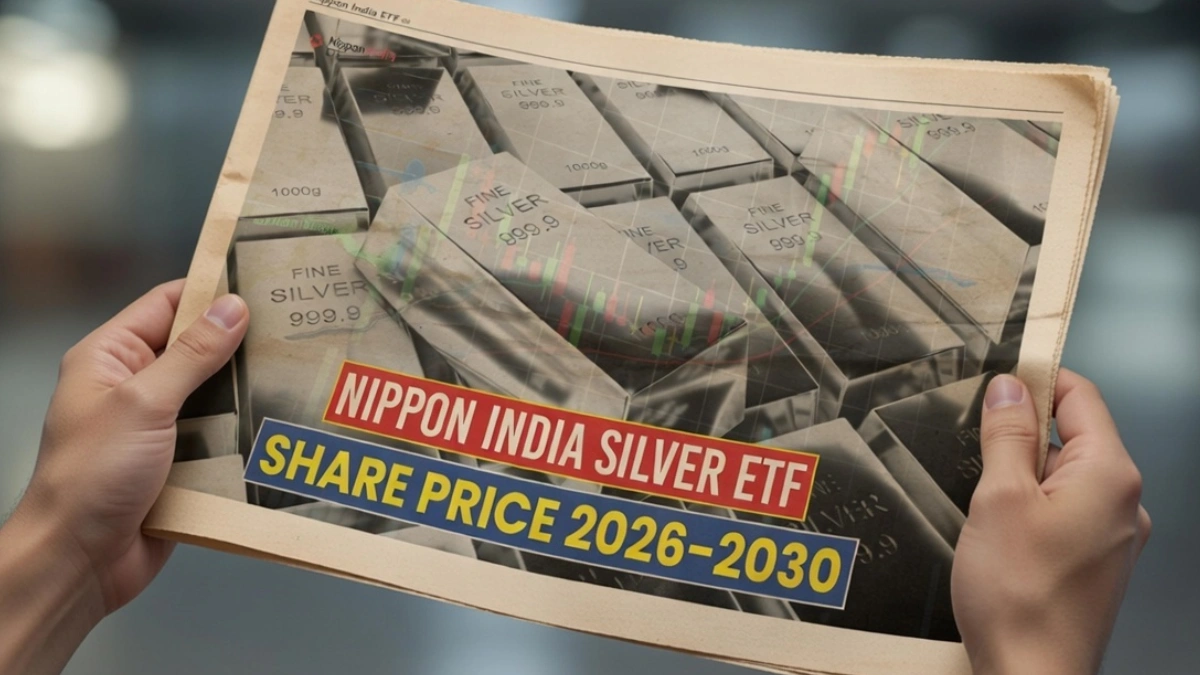
The Nippon India Mutual Fund Silver ETF provides investors with exposure to silver prices without the need to hold physical metal. Its share price generally tracks the performance of silver bullion in the domestic and international markets, adjusted for fund expenses and tracking error.
Silver prices are driven by broad macroeconomic trends, inflation expectations, industrial demand, jewellery consumption and currency movements. The ETF thereby serves as a proxy vehicle for gaining financial exposure to silver price movements.
Historical Performance and Recent Trends
Over the past several years, silver prices have exhibited higher volatility compared to gold due to dual demand drivers — investment demand and industrial usage. The Nippon India Silver ETF has reflected these market swings, rising sharply when silver prices rallied and correcting during periods of subdued demand.
Recent price action in 2025 and early 2026 suggests renewed investor interest in precious metals, influenced by global monetary conditions, inflation dynamics, and portfolio diversification strategies.
Silver Price and ETF Forecast 2026–2030
YearSilver Price OutlookETF Target Range (Approx.)2026Stable to Moderately Bullish₹3,500 – ₹4,2002027Continued Growth Potential₹4,200 – ₹5,0002028Cyclical Fluctuations with Uptrend₹5,000 – ₹6,0002029Strong Industrial Demand Support₹6,000 – ₹7,2002030Structural Long-Term Uptrend₹7,200 – ₹9,000This table presents a long-term forecast for the Nippon India Silver ETF based on expected silver price trajectory and macroeconomic assumptions. Actual ranges are influenced by global supply-demand dynamics, monetary policy shifts, and changes in investor sentiment.
Key Factors Influencing Long-Term Outlook
Several elements shape the 2026–2030 outlook for silver and the corresponding ETF performance. Industrial demand from electronics and renewable energy sectors can support structural growth in silver consumption. Inflation and currency weakness often boost safe-haven demand for precious metals.
Monetary policy decisions by central banks, geopolitical tensions, and global economic growth forecasts also influence precious metal prices. The ETF’s price performance depends on how these macro forces develop over time.
Investor Strategies and Risk Considerations
For long-term investors, a Silver ETF can act as a diversification tool alongside equities, bonds, and other commodities. Dollar-cost averaging investing consistent amounts at regular intervals can help manage volatility over extended horizons.
Investors should consider long-term fundamentals and not equate short-term price movements with guaranteed returns. Silver markets can exhibit rapid upswings and downturns, and investors need to align positions with risk tolerance and investment horizon.
Tax and Liquidity Aspects
Investors should be aware of tax implications associated with ETFs. In India, the holding period affects capital gains taxation, with different slabs for short-term and long-term gains. ETFs are traded on stock exchanges with daily liquidity, allowing investors to enter and exit positions at market prices.
Understanding brokerage costs, expense ratios, and tax obligations is essential for overall return calculation.
Conclusion
The Nippon India Silver ETF offers investors a practical means to gain exposure to silver price movements. Forecasts from 2026 to 2030 indicate potential growth phases reflecting industrial demand, safe-haven investment appeal, and global macroeconomic drivers. Long-term investors should base decisions on fundamental analysis, risk tolerance and diversified portfolio strategies to navigate volatility and capture long-term trends.
Disclaimer: This article is for informational purposes only. Forecasts and price targets are indicative and not guarantees of future performance. Silver prices and ETF values are subject to market risk and economic conditions. Investors should consult financial advisors or conduct personal research before making investment decisions.
“), i.text = “window._taboola = window._taboola || [];_taboola.push({mode:’alternating-thumbnails-a’, container:’taboola-below-article-thumbnails’, placement:’Below Article Thumbnails’, target_type: ‘mix’});”, n.appendChild(l), n.appendChild(i), e(n, t) } Array.prototype.filter || (Array.prototype.filter = function(e, t) { if (“function” != typeof e) throw TypeError(); let n = []; for (let l = 0, i = this.length >>> 0; l < i; l += 1) if (l in this) { let r = this[l]; e.call(t, r, l, this) && n.push(r) } return n }), window.insertAfter = e, window.getElementByXPath = t, window.injectWidgetByXpath = function e(l) { let i = t(l) || document.getElementById(“tbdefault”); i && n(i) }, window.injectWidgetByMarker = function e(t) { let l = document.getElementById(t); l && l.parentNode && n(l.parentNode) }, window.innerInject = n }();injectWidgetByMarker(‘tbmarker’);