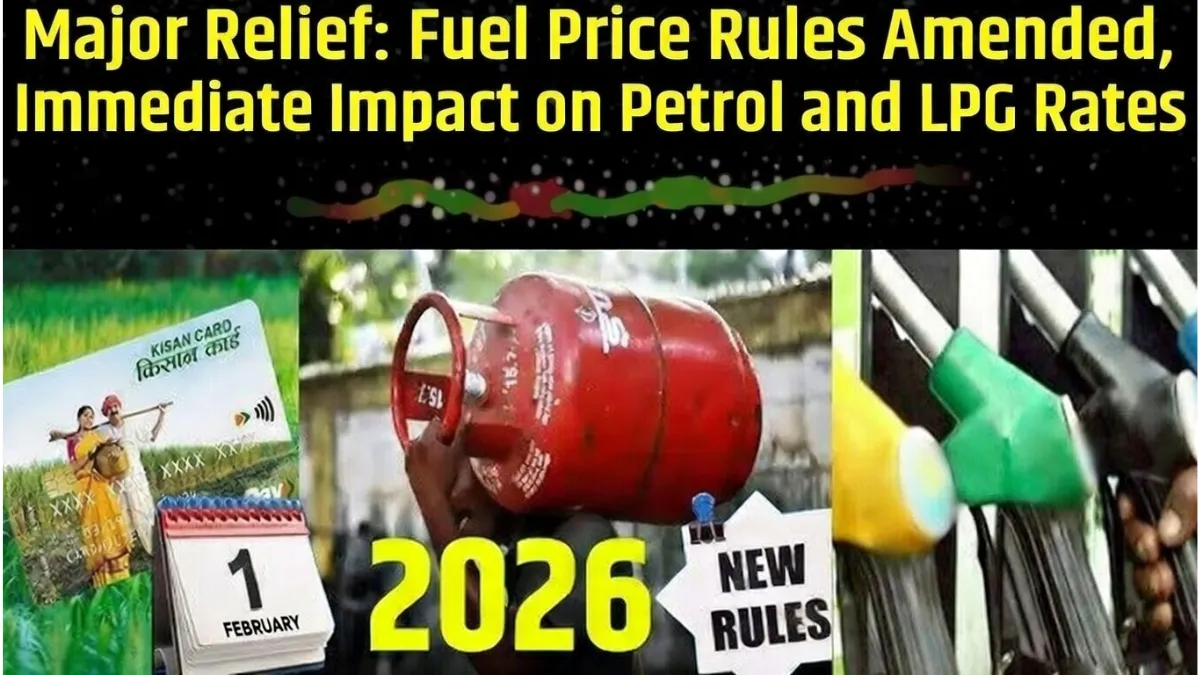
In a major relief for households and daily commuters, the government has amended fuel price rules, leading to an immediate impact on petrol and LPG rates. The revised framework is aimed at improving price stability, reducing sudden spikes, and ensuring quicker transmission of cost benefits to consumers amid volatile global energy markets.
Why Fuel Price Rules Were Amended
The amendment was introduced to address long-standing concerns over delayed price adjustments and unpredictable rate fluctuations. Authorities observed that consumers often did not receive timely benefits when global prices softened. The new rules are designed to create a smoother pricing mechanism that balances market realities with consumer protection.
What Changes for Petrol Consumers
Under the revised rules, petrol prices are expected to respond more quickly to changes in crude oil costs and taxation adjustments. This means reduced lag between global price movements and retail fuel rates, offering more immediate relief to motorists when costs ease.
Fuel SegmentImpact After Rule AmendmentPetrol PricesFaster reflection of cost adjustmentsLPG CylindersImproved subsidy and pricing alignmentPrice Revision CycleMore responsive and transparentConsumer ImpactReduced volatility and quicker reliefPolicy OversightCentral fuel pricing frameworkHow LPG Users Benefit
For LPG consumers, the amendment improves alignment between subsidy policies and market pricing. This could result in quicker revisions in cylinder prices and more predictable household fuel expenses, especially for families dependent on domestic LPG for daily cooking needs.
Impact on Oil Marketing Companies
Oil marketing companies will operate under clearer pricing guidelines, reducing uncertainty and improving planning. The updated rules aim to maintain financial viability for suppliers while ensuring fair pricing for consumers, supported by oversight from the Ministry of Petroleum and Natural Gas.
What Consumers Should Expect Going Forward
Consumers may notice more frequent but smaller price adjustments rather than sharp hikes or drops. The overall objective is stability, transparency, and faster pass-through of benefits whenever input costs decline.
Conclusion: The amended fuel price rules deliver timely relief by ensuring petrol and LPG rates respond faster to cost changes, easing pressure on household budgets and daily travel expenses.
Disclaimer: This article is based on policy amendments and expected outcomes related to fuel pricing rules. Actual petrol and LPG prices may vary by location, taxes, and distributor decisions. Consumers should rely on official notifications and local price updates for accurate and legally binding information.