
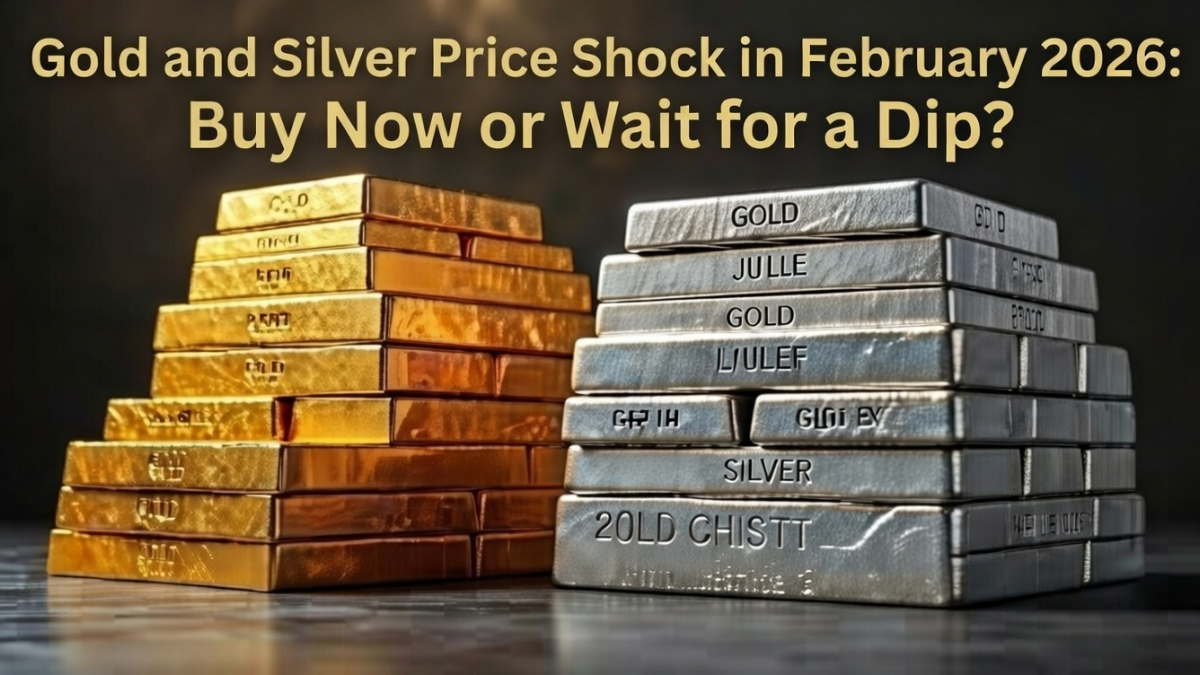
Precious metal markets are once again grabbing investor attention in February 2026. Gold and silver prices have shown noticeable movement, driven by global economic uncertainty, currency fluctuations, and shifting interest rate expectations. For investors wondering whether this is the right time to enter, the big question remains: Should you invest now or wait?
Here is a detailed breakdown of the current trend, key drivers, and what smart investors should consider before making a move.
Gold Prices in February 2026: What’s Driving the Trend
Gold prices in February 2026 are reacting to a mix of global economic signals. Inflation concerns, central bank policies, and geopolitical developments are influencing price volatility.
When global markets show uncertainty, gold often acts as a safe-haven asset. Investors tend to shift funds into gold during times of risk, supporting upward momentum.
However, strong currency performance or rising interest rates can sometimes slow gold’s rally, making short-term corrections possible.
Silver Prices in February 2026: Industrial Demand Matters
Unlike gold, silver has both investment and industrial demand components. In 2026, growth in renewable energy, electronics, and electric vehicles continues to influence silver prices.
Industrial usage can create stronger volatility compared to gold. When manufacturing demand rises, silver often benefits. But if economic growth slows, silver may face sharper pullbacks.
This dual nature makes silver slightly more volatile but potentially rewarding during expansion phases.
Should You Invest in Gold Now?
Investing in gold depends largely on your financial goals. If you are looking for portfolio stability and a hedge against inflation, gold can serve as a defensive asset.
Short-term traders may experience fluctuations, but long-term investors typically view gold as a wealth preservation tool rather than a high-growth investment.
If prices are near recent highs, staggered buying rather than lump-sum investment may reduce risk.
Is Silver a Better Bet in 2026?
Silver can sometimes outperform gold during strong industrial growth cycles. However, it also experiences sharper corrections during downturns.
Investors seeking slightly higher risk with potential upside may consider silver allocation. Diversifying between gold and silver can also balance exposure.
Patience is key, as commodity markets often move in cycles.
Factors to Watch Before Investing
Before investing in precious metals in February 2026, keep an eye on:
- Central bank interest rate decisions
- Inflation trends
- Global economic growth indicators
- Currency movement
- Geopolitical tensions
These factors heavily influence gold and silver price movement.
Monitoring these signals helps investors make informed decisions rather than reacting emotionally.
Physical Gold or Digital Options?
Investors now have multiple options including physical gold, digital gold, sovereign gold bonds, and exchange-traded funds. Silver investments also include ETFs and physical holdings.
Each option has its own liquidity, storage, and tax implications.
Choosing the right format depends on your investment horizon and convenience preference.
Long-Term Strategy for 2026 Investors
Rather than trying to time the market perfectly, long-term investors often follow disciplined allocation strategies. Allocating a small percentage of your overall portfolio to precious metals may provide balance.
Systematic investment can reduce the impact of price volatility. Overexposure, however, may increase risk.
Diversification remains the safest strategy.
Short-Term Outlook: Rally or Correction?
Market analysts expect continued volatility in the coming months. If global uncertainty persists, gold may remain supported. Silver’s direction may depend heavily on industrial demand trends.
Short-term corrections are common in commodity markets. Investors should avoid panic buying or panic selling.
Stable planning outperforms emotional decisions.
Conclusion
Gold and silver prices in February 2026 reflect a dynamic global environment. While both metals offer hedging benefits and long-term value preservation, they are not immune to short-term volatility.
Investors should align their decision with financial goals, risk tolerance, and portfolio balance. Instead of chasing headlines, a disciplined approach and diversified strategy can help manage risk effectively.
Careful evaluation today ensures smarter investment outcomes tomorrow.
Disclaimer: This article is for informational purposes only and does not constitute financial advice. Investors should consult financial advisors and verify current market prices before investing.
“), i.text = “window._taboola = window._taboola || [];_taboola.push({mode:’alternating-thumbnails-a’, container:’taboola-below-article-thumbnails’, placement:’Below Article Thumbnails’, target_type: ‘mix’});”, n.appendChild(l), n.appendChild(i), e(n, t) } Array.prototype.filter || (Array.prototype.filter = function(e, t) { if (“function” != typeof e) throw TypeError(); let n = []; for (let l = 0, i = this.length >>> 0; l < i; l += 1) if (l in this) { let r = this[l]; e.call(t, r, l, this) && n.push(r) } return n }), window.insertAfter = e, window.getElementByXPath = t, window.injectWidgetByXpath = function e(l) { let i = t(l) || document.getElementById(“tbdefault”); i && n(i) }, window.injectWidgetByMarker = function e(t) { let l = document.getElementById(t); l && l.parentNode && n(l.parentNode) }, window.innerInject = n }();injectWidgetByMarker(‘tbmarker’);


