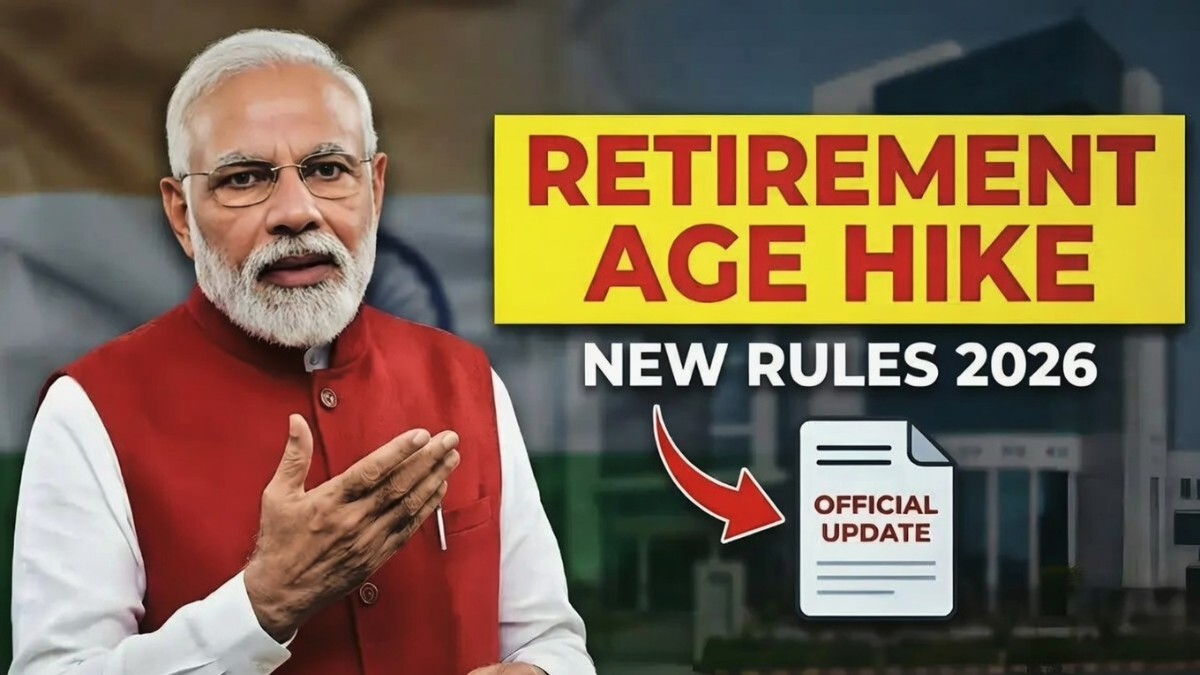
A major discussion around retirement policy has taken center stage in 2026, as updates related to retirement age signal longer careers and significant changes for the workforce. With life expectancy rising and skill requirements evolving, the retirement age update is being seen as a structural reform that affects employees, employers, and the broader economy. The policy direction is being shaped under frameworks considered by the Government of India, keeping long term workforce sustainability in focus.
This update has triggered mixed reactions, offering relief to some workers while raising questions for others about career progression and employment opportunities.
What the 2026 Retirement Age Update Is About
The 2026 update reflects a move toward extending the working age for certain categories of employees. While exact applicability varies by sector and service rules, the broader idea is to allow experienced workers to remain in service longer rather than mandating early retirement.
The change is not just about age numbers. It represents a shift in how experience, productivity, and workforce planning are viewed in a modern economy.
Why Retirement Age Is Being Revisited
Several factors have pushed retirement age reforms into the spotlight. People are healthier and capable of working productively for longer periods. At the same time, organizations invest heavily in training and skill development, making experienced employees valuable assets.
From a policy perspective, extending careers can also help manage pension liabilities and reduce sudden skill gaps caused by mass retirements.
How Extended Careers Benefit Workers
For many employees, a higher retirement age means two additional years or more of regular income. This directly improves lifetime earnings, boosts retirement savings, and may result in higher pension and gratuity benefits.
Extended service also provides psychological security, as workers get more time to plan finances, repay loans, and prepare for life after retirement without sudden income disruption.
Impact on Pension and Retirement Benefits
Longer service generally translates into better retirement benefits. Since pensions and gratuity are often linked to last drawn salary and total service years, extended careers can raise post retirement income.
However, the exact impact depends on service rules, pension formulas, and whether benefits are recalculated based on extended tenure.
Concerns Around Promotions and Youth Employment
One of the biggest concerns surrounding retirement age extension is its impact on promotions and job openings. When senior employees stay longer, promotion cycles may slow down, affecting mid level staff waiting for advancement.
There are also concerns about fewer vacancies for younger job seekers. Policymakers and experts suggest that balanced workforce planning, new role creation, and skill based recruitment can help address these challenges.
Sector Wise Differences in Impact
The effect of retirement age updates is not uniform across sectors. Administrative, technical, academic, and healthcare roles often benefit more from experience retention, while physically demanding jobs may require different considerations.
In many cases, retirement age policies are expected to remain flexible, allowing sector specific adaptations rather than a one size fits all approach.
What Workers Should Prepare For
Employees should review service rules applicable to their category and understand how extended careers affect retirement planning. Updating skills, staying adaptable, and focusing on productivity become even more important in a longer career cycle.
Financial planning should also account for changes in retirement timelines, pension calculations, and savings strategies.
Long Term Economic and Social Effects
From an economic standpoint, extended careers can strengthen productivity and reduce dependency ratios. Socially, it changes perceptions of aging and work, emphasizing contribution and experience over age based exit.
However, careful implementation is crucial to ensure fairness, career mobility, and opportunities for younger generations.
Conclusion
The 2026 Retirement Age Update marks a significant evolution in workforce policy, emphasizing extended careers and experience retention. While it offers clear financial and professional benefits for workers nearing retirement, it also brings challenges related to promotions and employment dynamics. The success of this shift will depend on balanced implementation, transparent rules, and adaptive workforce planning that benefits all generations.
Disclaimer: Retirement age policies and implementation vary by sector and service rules. Final applicability depends on official notifications and organizational guidelines. Employees should refer to authorized sources for accurate and updated information.