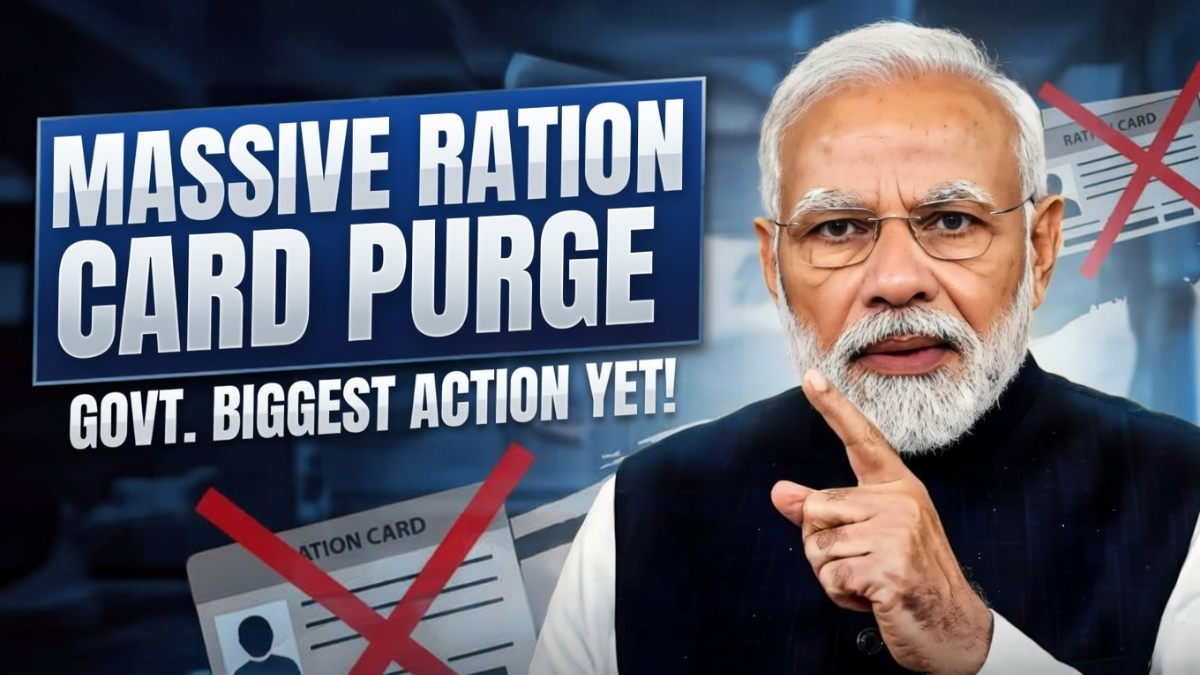
A major ration card clean up drive in 2026 has triggered concern after reports confirmed that around 2 lakh ration card names were removed from beneficiary lists without prior individual notice. The action is part of an intensified verification exercise aimed at eliminating ineligible, duplicate, or inactive beneficiaries from the Public Distribution System. The move is being carried out under policy directions of the Government of India in coordination with state food and civil supplies departments.
While authorities say the purge strengthens transparency, many families are worried about sudden loss of subsidized food support.
Why the Ration Card Purge Happened
Governments periodically conduct audits to ensure that welfare benefits reach only eligible households. In 2026, data matching using Aadhaar, income records, migration data, and duplicate checks was intensified. Names found to be duplicated, inactive, or non compliant were removed to curb leakage and misuse.
Officials state that the objective is to redirect benefits to genuinely needy families waiting for inclusion.
Who Was Most Affected by the Removal
The purge largely affected households with mismatched records, inactive usage for long periods, unlinked Aadhaar details, or multiple ration cards in a single family. Migrant families who failed to update addresses and households exceeding income thresholds were also flagged.
In many cases, removals were system driven after automated verification rather than manual scrutiny.
Why Many Families Did Not Receive Prior Warning
The verification relied heavily on digital cross checks. Where discrepancies were clear, names were removed as per rules, with post action grievance windows provided instead of pre removal notices. Authorities argue this speeds up clean up but acknowledge it can cause confusion for genuine beneficiaries.
States have been instructed to facilitate appeals and corrections for eligible families.
Immediate Impact on Beneficiaries
Families whose names were struck off may face disruption in receiving subsidized grains. This can affect monthly household budgeting, especially for low income earners dependent on the ration system.
However, removal does not necessarily mean permanent exclusion. Eligible households can seek restoration after verification.
How to Check If Your Ration Card Is Affected
Beneficiaries can check status through state ration portals, fair price shops, or local food supply offices. Verifying Aadhaar linkage, family member details, and usage history helps identify the reason for removal.
Keeping mobile numbers updated is important to receive alerts and updates.
Steps to Restore a Deleted Ration Card
If removal was erroneous, households can apply for restoration by submitting corrected documents. Typical requirements include identity proof, Aadhaar linkage, income or residence proof, and a declaration of eligibility.
Grievance redressal timelines vary by state, but applications are being prioritized to minimize hardship.
What Authorities Say About the Purge
Officials emphasize that the drive improves fairness by removing ineligible entries and freeing resources for deserving families. They also state that no eligible household will be denied benefits if proper verification is completed.
Help desks and camps are being organized in many areas to assist affected families.
Common Myths Around the Ration Card Deletions
A common myth is that names were removed randomly. In reality, removals followed data based criteria. Another misconception is that restoration is impossible. Eligible families can reapply and get benefits reinstated after checks.
Understanding the process helps reduce panic and misinformation.
What Beneficiaries Should Do Now
Households should promptly check their ration status, update Aadhaar and family details, and file grievances if eligible. Avoid agents demanding fees for restoration. Official processes do not require payment.
Staying informed through local authorities ensures faster resolution.
Conclusion
The 2026 ration card purge removing around 2 lakh names marks a significant step toward cleaning up welfare databases. While the action has caused concern due to limited prior warning, it is not the end for eligible families. With verification and grievance mechanisms in place, genuine beneficiaries can restore access. Acting quickly, keeping records updated, and relying on official channels are key to navigating this transition smoothly.
Disclaimer: Ration card rules, verification criteria, and restoration procedures vary by state. Beneficiaries should confirm details with their local food and civil supplies offices or official state portals.