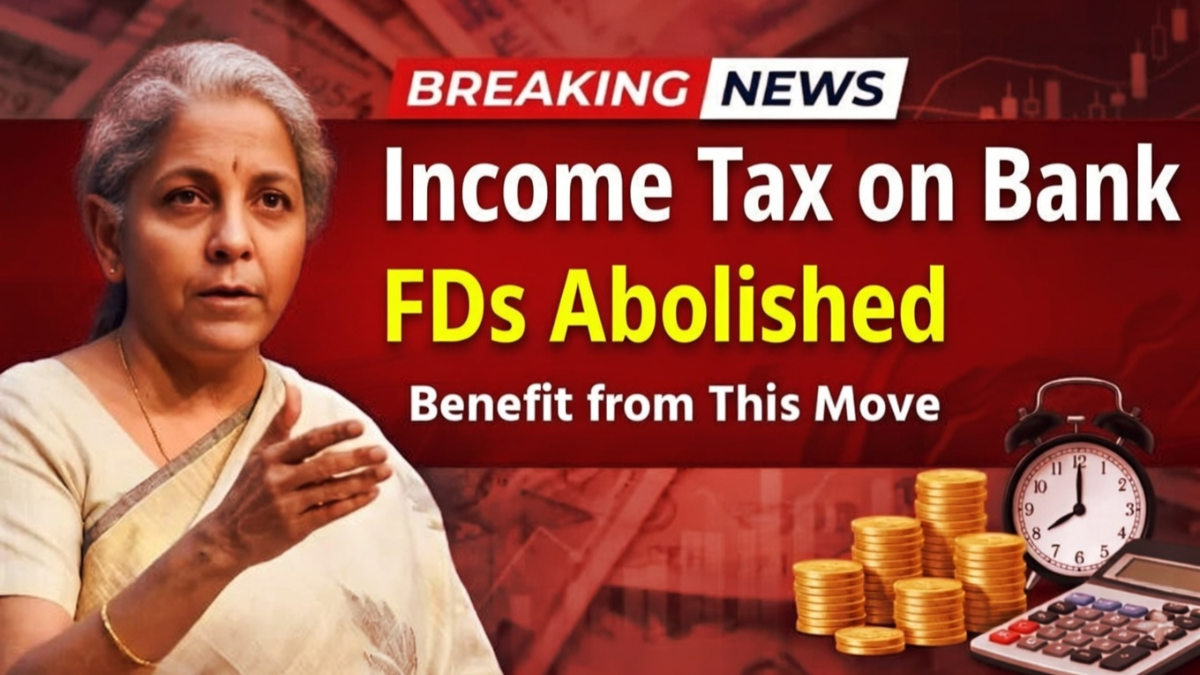
A viral claim in 2026 suggests that income tax on bank fixed deposits has been abolished, promising massive relief for crores of depositors. The news has spread rapidly among senior citizens, retirees, and conservative investors who rely heavily on FD interest for regular income. But is this claim officially true, or is it a misunderstanding of existing tax provisions and recent discussions? This article explains the full reality, clarifies what has changed and what has not, based on the income tax framework governed by the Government of India.
Why the ‘No Tax on FD Interest’ Claim Is Trending
Rising FD rates, higher interest payouts, and discussions around tax relief for senior citizens have fueled confusion. Many social media posts have merged multiple provisions like higher exemptions, rebates, and TDS relief into a single headline claiming total abolition of tax on FD interest.
Such simplification has led to widespread misunderstanding among depositors.
Is Income Tax on Bank FD Interest Really Abolished
No. Income tax on bank FD interest has not been abolished. Interest earned on fixed deposits continues to be taxable under the Income Tax Act as “Income from Other Sources.”
There has been no official notification announcing a blanket exemption or abolition of tax on FD interest for all depositors.
What Actually Applies to FD Interest in 2026
FD interest is added to the taxpayer’s total income and taxed according to the applicable slab rate. This rule applies to both cumulative and non cumulative FDs.
Banks may deduct Tax Deducted at Source when interest crosses the prescribed threshold, but TDS is not the same as final tax liability.
Why Some People Are Paying Zero Tax on FD Interest
Some depositors legitimately pay zero tax on FD interest due to existing provisions. These include basic exemption limits, rebates, and deductions that reduce taxable income to nil.
For individuals whose total income remains below the taxable threshold after deductions, FD interest does not result in any tax payable, which often gets misinterpreted as “tax abolished.”
Special Relief for Senior Citizens Explained
Senior citizens enjoy higher interest exemption limits for TDS on FD interest compared to other taxpayers. In addition, certain deductions and exemptions can significantly reduce their tax burden.
However, even for senior citizens, FD interest is taxable if total income exceeds the exemption limit. There is no complete tax abolition for FD income as of now.
TDS vs Actual Income Tax on FDs
A common confusion is between TDS and income tax. TDS is only a method of collecting tax in advance. Even if no TDS is deducted, the interest may still be taxable.
Similarly, TDS deduction does not mean final tax liability. Taxpayers can claim refunds or pay additional tax while filing returns, depending on their total income.
Who Benefits the Most From Current FD Tax Rules
Low income earners, pensioners with limited income sources, and individuals who effectively use deductions benefit the most. For them, FD interest may not lead to any additional tax outgo.
This practical relief is often mistaken as a policy change abolishing tax on FDs.
What Investors Should Do Before Believing Viral Claims
FD investors should always verify tax related news through official budget announcements or income tax notifications. Making financial decisions based on viral messages can lead to compliance issues or incorrect tax filing.
Understanding one’s total income and applicable slab remains the safest approach.
Will the Government Abolish FD Tax in the Future
There is currently no confirmed plan to abolish income tax on FD interest entirely. While tax reforms are ongoing and relief measures are discussed, any such major change would require formal legislative approval and clear notification.
Until then, existing tax rules continue to apply.
Conclusion
The claim that income tax on bank FDs has been abolished is misleading. FD interest remains taxable under current income tax laws. While many depositors may effectively pay zero tax due to exemptions, deductions, or rebates, this is not the same as a complete abolition of tax. Investors should stay informed through official sources and plan their finances based on verified rules rather than viral headlines.
Disclaimer: Tax rules and exemptions are subject to change through official government notifications. This article is for informational purposes only and should not be considered tax advice.